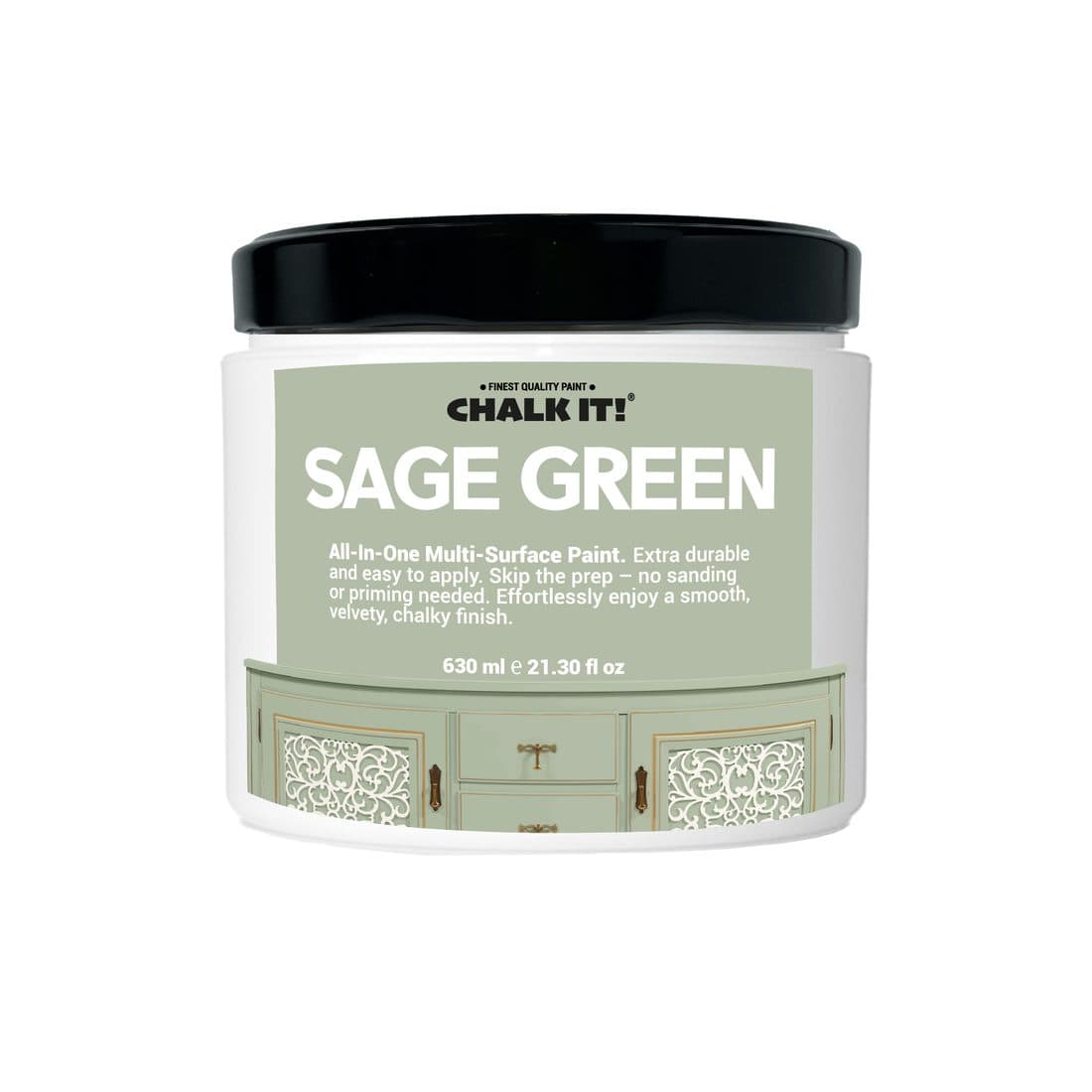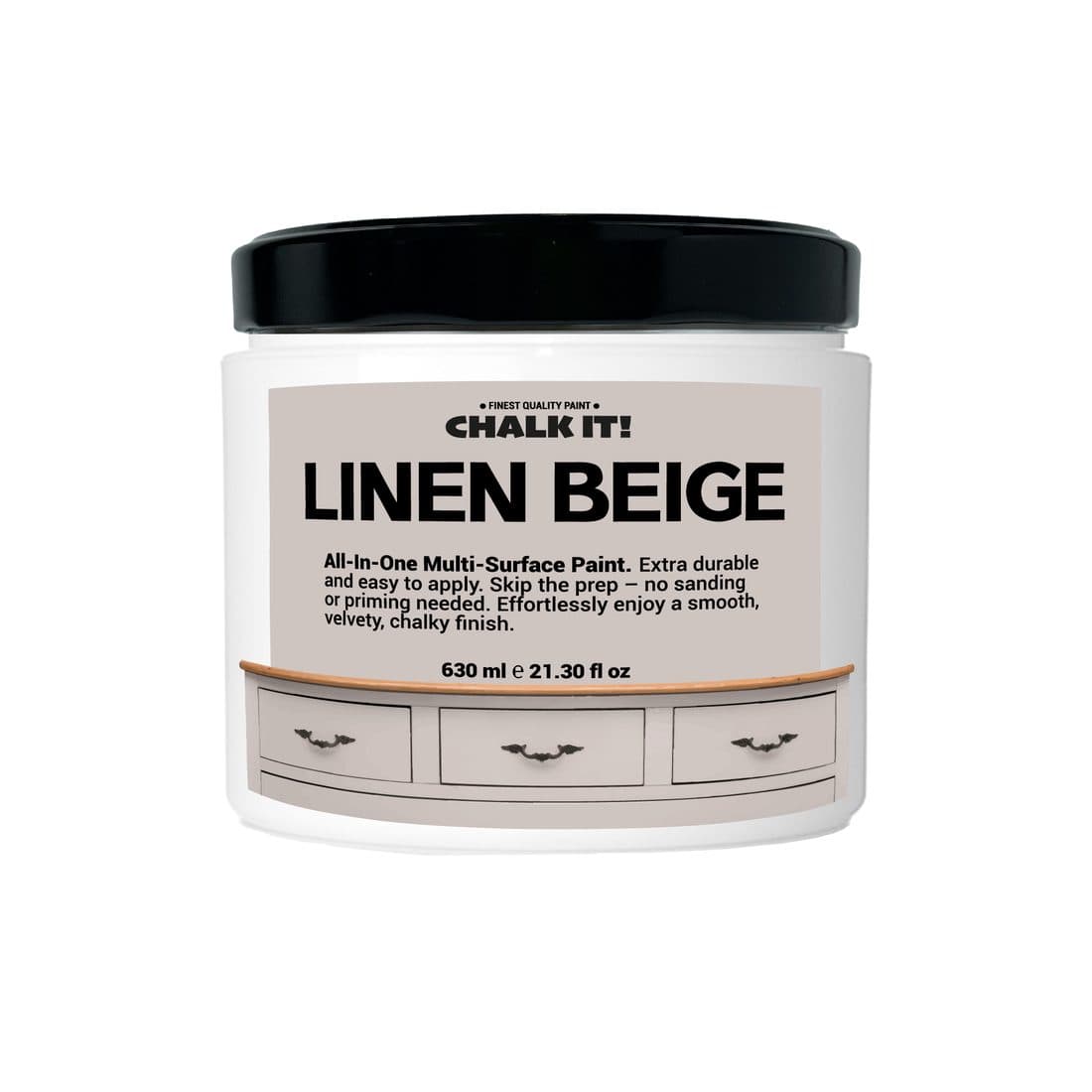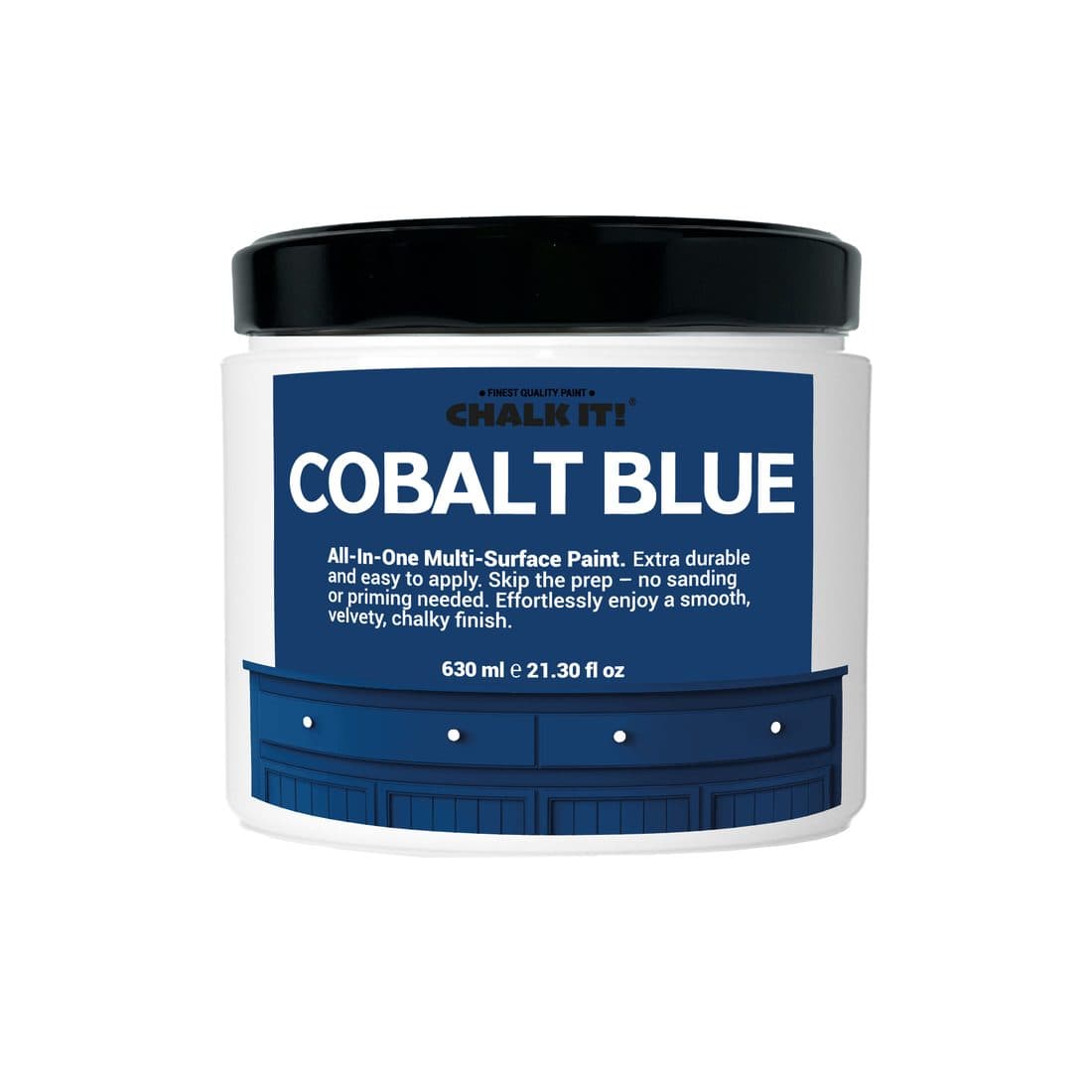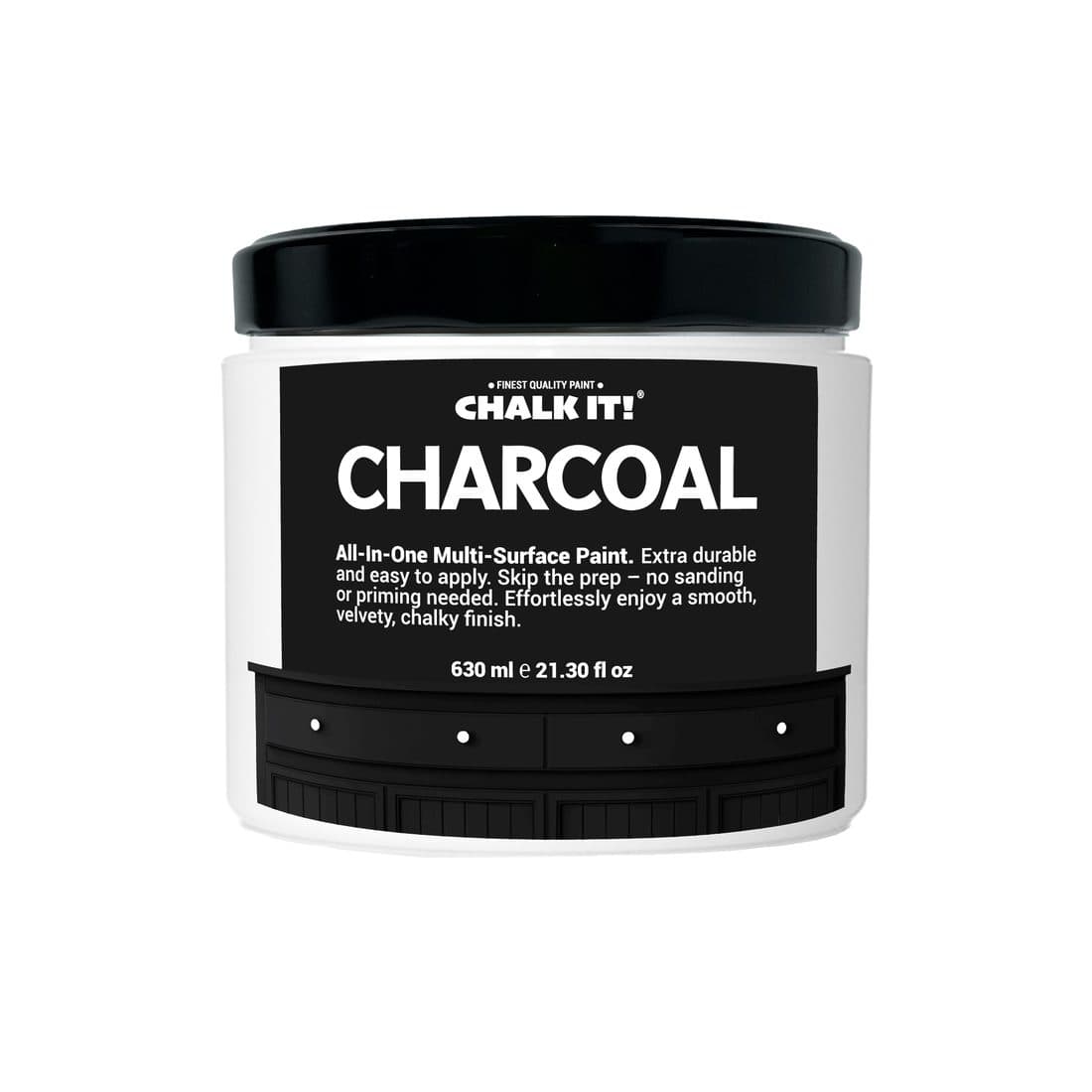
Painting furniture used to mean a weekend of sanding, priming, painting, then sealing with wax. All-in-one chalk paint changes that. With Chalk It!, you clean the piece and start painting — the primer and top coat are built into the formula. Here's exactly how to get a smooth, durable, professional-looking finish on your first try.
What you'll need
- Chalk It! paint in your chosen color
- A quality flat or oval brush (or a small foam roller for flat panels)
- A damp cloth and a little degreaser or sugar soap
- Painter's tape for clean edges (optional)
- A drop cloth to protect your floor
Step 1: Clean, don't sand
The single most important step isn't sanding — it's cleaning. Grease, polish and dust stop any paint from bonding. Wipe the whole piece down with a damp cloth and a little degreaser, then let it dry. For most furniture, that's all the prep you need.
When a light scuff helps
On very glossy or slick surfaces (high-gloss laminate, varnished tabletops), a quick once-over with a fine sanding sponge gives extra grip. It's optional, not required.
Step 2: Paint two thin coats
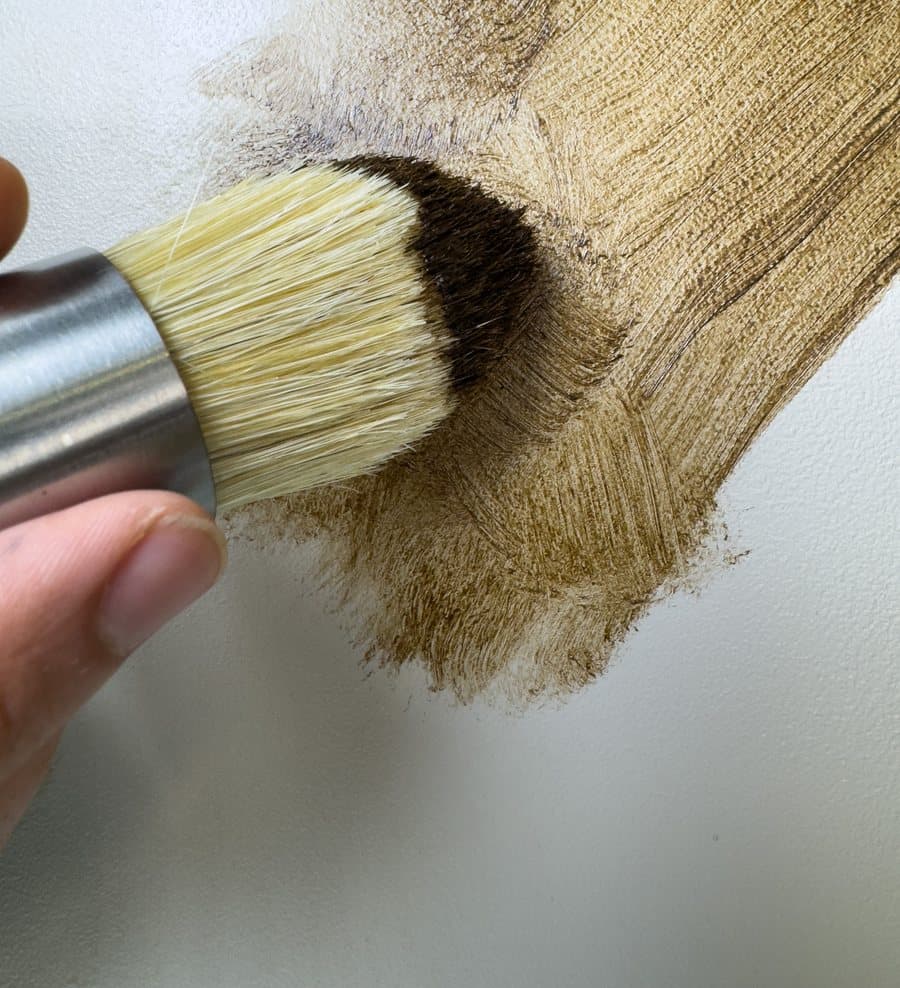
Thin coats beat thick ones every time. Load your brush lightly and work in long, even strokes, following the direction of the wood grain. The first coat is about grip and may look patchy — that's normal. Wait about an hour, then apply a second coat for full, even color.
Chalk It! self-levels as it dries, so brush marks soften out on their own. For large flat surfaces like tabletops and cabinet doors, a small foam roller gives an ultra-smooth result.
Step 3: Let it cure — and skip the wax
Chalk It! dries to the touch in about 30 minutes, so you can recoat the same day. Unlike traditional chalk paint, it cures to a hard, wipeable matte finish on its own — no wax, no buffing, no sealer. Give it a day or two to fully harden before heavy daily use.
Want extra protection?
For high-traffic pieces like a kitchen table or dresser top, you can add a clear matte top coat if you prefer — but it isn't necessary for most projects.
Common mistakes to avoid
- Skipping the cleaning step — the #1 cause of peeling paint.
- Overloading the brush — thick coats drip and dry unevenly.
- Rushing between coats — give the first coat time to grip.
- Working in direct heat — paint that dries too fast can drag.
That's the whole process. Clean, two thin coats, done. A single jar covers about 110 sq ft — enough for a dresser, a set of chairs, or a few cabinet doors.