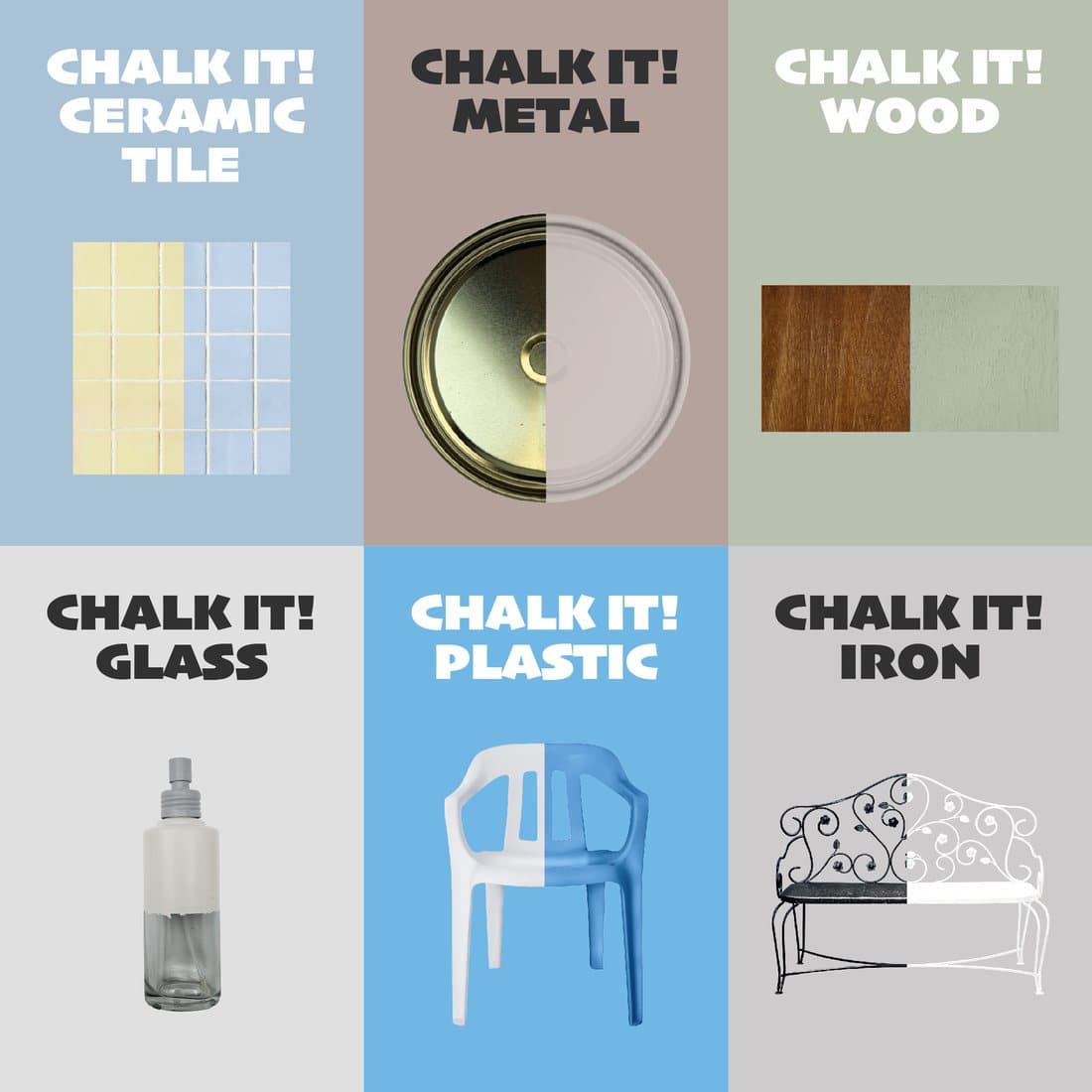
Plastic and glass are the surfaces people are sure will never hold paint — too slick, too shiny. The secret isn't a special spray; it's the right paint and a clean surface. Chalk It! bonds to both. Here's how to get a finish that stays put.
Painting plastic (chairs, planters, decor)
- 1Clean thoroughly with soapy water, then degrease — plastic holds oils and mold-release residue.
- 2Scuff glossy plastic lightly with a fine sanding sponge for extra grip (optional but recommended on slick finishes).
- 3Paint two thin coats, letting each dry. Thin is key on plastic — thick coats stay rubbery.
- 4Let it cure fully before use so the finish hardens.
This is how a faded plastic patio chair, a dollar-store planter, or a kid's storage bin becomes something that looks custom.
Painting glass (vases, jars, bottles)
- 1Clean with glass cleaner or rubbing alcohol to remove every trace of grease and fingerprints.
- 2Paint thin, even coats — glass shows drips, so light passes win.
- 3Cure fully before handling or filling.
Painted glass is perfect for vases, candle holders, storage jars and bottle vignettes. For decorative-only pieces the cured finish is plenty durable; for anything washed often, add a clear top coat.
Two thin coats, always
On both plastic and glass, thin coats are everything. They dry harder, level smoother, and grip better than one heavy coat.
One paint for the whole project
The real advantage: because the same jar works on plastic, glass, wood, metal, ceramic and tile, you can paint an entire mismatched project — a chair, a planter and a glass jar — in one matching color, with one product.